Afghanistan’s linchpin: Kandahar
Posted: November 16, 2010 Filed under: Afghanistan | Tags: Afghanistan, Kandahar, Moshtarak, Panjwaii, Zangabad Leave a commentKandahar is the Taliban’s stronghold and target of an allied assault in Afghanistan. Can NATO win hearts and minds as well as territory?
NEAR ZANGABAD, AFGHANISTAN
First came the nightly rocket bombardments, targeting abandoned mud houses about 30 miles southwest of Kandahar City, where Taliban insurgents stored 82mm antitank guns, grenade launchers, and rifles, and where they made bombs and staged attacks on NATO and Afghan forces.
For weeks, NATO and Afghan commando units launched covert raids against Taliban leaders, shattering the insurgency’s local command structure. So many commanders were killed that local tribal elders said even they weren’t sure who was in chargeof insurgent groups any more. The mishmash of vineyards, rivers, and marijuana fields in this slice of Kandahar Province is so easy to defend and so difficult to penetrate that militants and outlaws have sheltered here for as long as anyone can remember.
Then, last month, Afghan and US troops used the cover of night to storm the Horn of Panjwaii – an unruly spit of land posing the last direct threat to Kandahar City; southern Afghanistan‘s political center and the second-largest city in Afghanistan. Airborne assaults on October 15, 16, and 25 were the culmination of months of fighting in the city’s western fringes. Three Afghan National Army battalions – more than 2,000 men – and three companies of US paratroopers rode in on helicopters to attack the cluster of villages of Mushan, Zangabad, and Taluqan, considered key to Kandahar.
“There was fighting – bullets, bullets – and everyone was trying to get out,” says Mahmoud Dawood, a farmer who was caught up in the violence. Soldiers bound him and turned his house into a firing point, he continued, uncuffing him long enough to fill sandbags.
To the north, a US Army brigade – about 3,500 soldiers – had already swept into Zhari and Arghandab, rural districts that also served as staging grounds for militant attacks on Kandahar City.
To the west, in neighboring Helmand Province, NATO and Afghan forces overran a lawless plot of farmland called Marjah earlier this year.
All these maneuvers are part of an operation intended to scatter the Taliban in southern Afghanistan and provide breathing space for the West to better manage its exit strategy in 2011. The operation, called “Hamkari” (the Dari word for “togetherness”), is seen as the coalition’s best chance to win control of Kandahar from the Taliban. Similar operations touted as more successful than previous efforts are ongoing in the Arghandab and Zhari districts, and in Malajat, a suburb of Kandahar City.
Why is Kandahar so important?
Kandahar has more political and cultural significance than perhaps anywhere else in the country. For centuries, Afghanistan’s rulers have hailed from this patchwork of dense greenery and barren desert. It is home to the Shrine of the Cloak of the Prophet Muhammad, one of the country’s holiest sites. It’s also one of the nation’s most densely populated cities.
Kandahar was the de facto capital when the Taliban were in power, and is the insurgents’ most cherished objective.
Anarchy and warlordism here quickly pushed inhabitants toward the Taliban when the movement emerged 16 years ago. Following 2001, marginalization of the villagers in Panjwaii, Zhari, and Arghandab districts by the ruling Zirak Durrani tribes fed the movement with recruits and leaders and contributed to the violence and lawlessness here that have undermined NATO efforts.
As US Army Brig. Gen. Frederick “Ben” Hodges – until recently NATO’s director of operations in southern Afghanistan – put it: “Kandahar City and its environs are the cultural, spiritual, historical, political, religious center of gravity for the Pashtun belt” – the swath of southern and eastern Afghanistan where the Pashtun ethnic group, the one most closely affiliated with the insurgency, resides. That’s a main part of the reason NATO commanders consider the province the linchpin to winning over the country’s “hearts and minds” and ending the insurgency in Afghanistan.
The trick of the Taliban
Hamkari is one of the few operations where the coalition has the benefit of the full weight ofPresident Obama‘s troop surge, which saw America deploy 30,000 extra personnel to Afghanistan – there are some 6,900 NATO troops and 5,300 Afghan troops inside Kandahar. The US and NATO have more than 150,000 troops in Afghanistan. In Hodges’s words, the coalition will “never have it any better.” Yet for those troops in the Horn, the hard part has only just begun. As in nearly every place NATO has rolled into in southern Afghanistan, a Taliban retaliation in the shape of a brutal intimidation campaign is a near certainty.
“The trick of the Taliban,” a villager from the Horn says, is this: “They flee the fighting. Then slowly, slowly they return.” Asking not to be named for fear of reprisal, he added that everyone, “everywhere” was “scared [of] targeted killing.”
The one thing that is certain in the murky, indefinite war that has now enveloped the Horn, is a Taliban campaign that eschews military confrontation and terrorizes civilians, say inhabitants, tribal elders, local journalists, researchers, government officials, and NATO troops.
The point of such terrorizing? To show that NATO and the Afghan government may prevail on the battlefield, but they cannot provide the security, governance, and justice that would underpin the state’s political legitimacy, observers say.
Improving governance remains a NATO objective, but faced with little alternative to working with existing administration of one of the world’s most corrupt nations, officials are now downplaying this component of the campaign.
The hardest part: establishing security
Defeating the Taliban militarily is one thing. But success in southern Afghanistan, and thus the rest of the country, will depend far more on the coalition’s ability to protect Kandaharis from Taliban threats and terror tactics – and transforming the government into something worth supporting.
Taliban “kill elders, the officials, the doctors, the engineers,” says Abdul Haq, an Achekzai tribal elder who lives in the Horn. “This will put pressure on the people. Last year they killed many people in Panjwaii district, and the government couldn’t stop this killing.”
Rubbing his cropped gray hair and speaking softly, Mr. Haq recalled the murder of a teenage boy who had joined the police. The Taliban “had spies within the government who [sold him out], and after questioning him and hearing out his story, they killed him” in the mulberry grove where he had gone to pick fruit. “It was the third time they had arrested him. He was 17.”
Even in Kandahar City, which is nominally under government control, Taliban assassinations of authority figures have proven extremely effective. Kandahar’s deputy mayor was gunned down earlier this year, and his successor met the same fate. A senior warden at Kandahar jail was killed in a drive-by shooting on Nov. 6. The deputy head of the provincial adult literacy department was shot two days before.
Although exact figures are hard to come by, local media have reported more than 600 local government vacancies following a string of murders. The fact that empty posts outnumber assassinated officials is evidence that the fear campaign is working.
How to keep ‘ghosts’ away
As troops prepared for their final air assault on the Horn last month, US Lt. Gen. David Rodriguez, one of the most senior NATO officers in Afghanistan, quizzed Afghan commanders at a vantage point overlooking the Horn on how they planned to stop the insurgents – known locally as “ghosts”– from sneaking back into the Horn and terrorizing inhabitants.
“These operations you’ve been doing are going very well … the challenge is, after that, how do we continue to provide security for the people?” he asked. No one answered.
“What we need [to] do with every asset we have out there,” he continued, “is figure out how to make it bigger than it is, so that the people say, ‘OK, we’ll be protected.'”
Creating that sense of security has largely proved elusive for the Afghan and NATO security forces. In Marjah, in neighboring Helmand Province, a US Special Forces captain said that persuading people whose chief motivation is survival to stick their necks out was – not surprisingly – difficult.
“The Taliban are quick to take out tribal leaders,” said Captain Matt, whose full name can’t be disclosed under NATO press rules.
In one of the most notable examples of the Taliban targeting tribal strongmen, Abdul Hakim Jan, a powerful figure from Arghandab district (Kandahar City’s northern gateway) was one of 80 spectators killed when a massive car bomb detonated at a dog fight two years ago. His murder, which came soon after the death of Mullah Naqib, another Kandahar politician and elder from of the Alokozai tribe, signaled the fall of Arghandab to the Taliban.
Captain Matt said the same phenomenon was visible in Marjah. “This place has largely been stripped of its leadership…. We try to tell people that if you want yourselves to be represented then you need to do x, y, and z. We try to emphasize that, hey, it’s your leaders,” he said. “We want to emphasize that, not impose it.”
But progress is slow, with potential leaders choosing to remain in the shadows. “A man with a gun rules 100,” Matt says. “The coalition doesn’t rule by fear – [and] a carrot doesn’t do so much.”
Tribal wars even more fierce
The Taliban have also been quick to exploit tribal enmities. When NATO and Afghan forces swept into the Horn in 2006, in one of three previous campaigns to rid the place of insurgents, the arrival of Afghan Border Police from a traditional rival of the predominant Noorzai tribe sparked such fierce fighting that it made the struggle between pro- and antigovernment forces look tame. By backing the Noorzais, the Taliban bought themselves an entire tribal block.
Local history is also a factor, especially in the Horn, which has traditionally supported a lot of illegal activity. Criminal networks existed here long before the coup in 1973, the communist countercoup in 1978, and the subsequent Soviet invasion in 1979. Government writ didn’t really extend this far, and so the militants filled the vacuum.
Residents of Zangabad, a bucolic slice of orchards and irrigation ditches that Afghan troops stormed on Oct. 16, claim there was a Taliban court there, dispensing swift if brutal justice, and reportedly in direct competition with Kandahar City courts, which are perceived as sluggish, expensive, and corrupt.
Most locals dislike either option
Yet a major factor in the outcome of Kandahar, say top commanders, is the Afghan government’s ability to deliver. That’s the Achilles heel of NATO efforts to stabilize the country.
Although villagers who have lived under the Taliban’s austere sway have little love for the insurgents, they are not altogether convinced by the other side’s offer. Tales of police arranging for kidnappings, private militias snatching land, and government officials extorting civilians are commonplace in Kandahar.
“One man says he likes the Taliban,” explains Haji Abdul Karim, an elder from the Noorzai tribe and an old acquaintance of Taliban leader Mullah Mohammad Omar. “One man says he likes the government. But the majority hate both.”
In contrast to earlier NATO promises to sideline “malign actors” (also known as the Kandahar mafia), military commanders in southern Afghanistan are taking a new approach and have now quietly dropped their opposition to the region’s power brokers, and instead have reconciled themselves to working with them.
The alienation factor this tactic creates is undeniable: “There are many warlords in the government working to acquire money, not bring security,” says Haji Mohammad Zahir, a businessman from the Zhari district. People join the insurgents “because of the government’s corruption, bribes, and extortion,” he says.
Still, the security in Kandahar is a big step toward allowing locals to even consider such issues Hodges says: “There is a presence of security that is a lot more prevalent and reassuring than at any time in the past.”
Nato’s dilemma: how to stop the Taliban’s return
Posted: October 30, 2010 Filed under: Afghanistan | Tags: Kandahar, Lt-General David Rodriguez, Moshtarak, NATO, Panjwaii, Taliban, Taloqan Leave a commentNato and Afghan forces, which this week seized the last Taliban safe haven directly threatening Kandahar City, are drawing up plans to stop insurgents re-infiltrating the area and waging a campaign of intimidation against local inhabitants.
Earlier this week forces stormed the last cluster of villages under insurgent control in the nearby “Horn of Panjwaii” during a night-time helicopter raid. A Nato spokesman said resistance had been “light” but that troops were still clearing the area of home-made bombs.
The assault on Taloqan, a cluster of villages in the middle of the Horn, where inhabitants have typically leant towards the insurgents, is the culmination of months of fighting on the western fringes of the city. Read the rest of this entry »
Nato surge on Taliban stronghold drives civilians into the line of fire
Posted: October 21, 2010 Filed under: Afghanistan | Tags: civilian casualties, Kandahar, Moshtarak, Panjwaii, Special Forces, Taliban, Zangabad Leave a commentAs troops step up their attack on the militants’ Kandahar heartland, Julius Cavendish meets the ordinary people caught on the frontline
The first eyewitness accounts of Nato’s assault on the final Taliban sanctuary threatening Kandahar City have begun to emerge, painting a picture of sporadic fire fights, steady progress by Afghan and coalition forces, and flight by those inhabitants wealthy or lucky enough to escape the violence.
Earlier this week, Nato began its final and critical phase of a major offensive designed to clear Kandahar, the spiritual home of the Taliban, with hundreds of troops carrying out an air assault on the main insurgent base in the region. In interviews with The Independent, tribal elders, government officials and civilians in Kandahar City provided vivid descriptions of special forces night raids and Nato’s bombardment of the area in the preceding month – designed to damage the local Taliban leadership – and the tactics the insurgents used to cow inhabitants before fleeing in the face of coalition firepower.
Mahmoud Dawood, a 35-year-old farmer from the western tip of the Horn of Panjwaii, the area Afghan and Nato forces are trying to take, described how he was woken last Thursday night by explosions in a neighbouring village. Suddenly the blasts came closer, and the silhouette of an Afghan commando appeared in his open door. “There was a bright white light and a voice said in Pashto ‘Stand up’,” he said. Read the rest of this entry »
Violence, fraud and cronyism keep millions away from Afghan poll
Posted: September 20, 2010 Filed under: Afghanistan | Tags: Afghanistan, Anders Fogh Rasmussen, Elections, Karzai, NATO, Taliban Leave a commentAlmost as quickly as the international community rushed to praise Saturday’s parliamentary elections in Afghanistan, complaints of widespread irregularities began pouring in, echoing the protracted wrangle over vote-rigging that returned President Hamid Karzai to power last year.
Representatives from the US, UN and EU hailed the bravery of Afghans for heading to the polls on Saturday despite pre-election violence and Taliban attacks on polling day that killed 18 people. However evidence was mounting yesterday of polling stations opening late, intimidation of voters, and the widespread use of fake voting cards. There were also reports that there were not enough ballot papers and that children had cast ballots.
President Hamid Karzai praised “the courage of the people” in voting, saying it was “a positive and major step for strengthening democracy in this country”. Nato’s secretary general, Anders Fogh Rasmussen, applauded voters for turning out “despite the violence carried out by those attempting to deny the people’s most basic democratic right”. But the courage of many ordinary Afghans notwithstanding, what the evidence suggests so far is that power is disbursed across Afghanistan not by universal suffrage but through coercion, bullying, bribery, cronyism, patronage and fear. Read the rest of this entry »
In Afghan election, corruption colors aims of many female candidates
Posted: September 17, 2010 Filed under: Afghanistan | Tags: Afghanistan, Election, female emancipation Leave a commentThe 386 women running in Afghanistan’s election Saturday have been touted as a clear sign of success. But others say that many of them are merely puppets for rich powerbrokers.
KABUL, AFGHANISTAN
In a cynical reminder that Afghan politics is rarely what it seems, activists in Kabul question whether many female candidates running in Saturday’s parliamentary elections are actually champions of women’s rights.
The record 386 women running for parliament is seen by many as one of the few clear-cut successes of an election campaign that has been marred by violence and fraud. Yet some women’s rights campaigners say that many of the female candidates are merely puppets for shadowy figures trying to garner influence in the new Afghan parliament.
“It’s quite clear that there are many, many women who are running not because they have interests themselves, but to represent the interests of warlords and power brokers,” says Nargis Nehan, director of Equality for Peace and Democracy, an Afghan nongovernmental organization.
“Those being supported by a bank, a warlord, a tribal leader, these are the people able to spend money,” adds Wajma Frogh, a member of the Afghan Women’s Network, an NGO in Kabul. “I know villagers who have sold their votes [to a female candidate] for $20. People will vote for her. Another very honest women’s rights activist is not able to pay $20 a vote. She’s not going to make it into parliament.”
An age-old rhythm of patronage?
If Ms. Frogh, Ms. Nehan and others like them are right, it’s an uncomfortable truth for those trying to portray women’s participation in Afghanistan’s fledgling democracy as a beacon in an otherwise dark and stormy country. And the proliferation of proxy candidates represents a wider problem in Afghanistan – the country’s politics still beat to an age-old rhythm of patronage.
But not everyone says that competition between female candidates has been compromised.Samira Hamidi, an activist with the Afghan Women’s Network, strikes an optimistic note.
“I know some of the [female candidates] and I know there is no one behind them, no warlords, mafia, drug dealers. We’ve been working closely with the election commission and people at the grassroots level and I haven’t heard anything,” says Ms. Hamidi.
Instead, Hamidi says, the participation of a record number of women is due to growing political awareness among Afghans and the march of women’s rights across the country.
Still, says Frough, the corruption that runs through Afghanistan’s political structure has also affected the new role of women in politics.
“It’s a patronage system,” she says. “Here democracy does not mean that people’s voices are important. Whoever is in power is in power because of coercion, because of someone else’s power…. This parliament is only a check-the-box formality so the international community can say, ‘Yeah, Afghanistan has a democracy.’ ”
Women’s seats used to garner broader influence
Saturday’s election will simply reflect how power is disbursed across Afghanistan as a whole, she says. Although parliamentarians in Afghanistan don’t wield the influence they do in some countries, they do retain important powers, such as a veto on cabinet appointments and oversight of the government’s budget.
“Although we have a very centralized government, there is still power in the parliament,” say Nehan, the director of Equality for Peace and Democracy. “Now everyone’s realized that they don’t want just one seat, they want as many as possible. The easiest and least challenging way of doing this is to fill the women’s seats because the competition between men is quite tough.”
With 25 percent of the 249 available seats reserved for women and just 386 candidates contesting them, the women’s field is far less packed than the men’s, where competition is about twice as fierce. Trying to exploit the women’s vote provides good value for money for patrons.
Proxy candidates entrench corruption
The problem with proxy candidates is that it entrenches the political corruption that has become a byword for Afghanistan.
“The country is already damaged and there is no room for more damage,” says Shinkai Karokhail, a female member of parliament (MP) from Kabul. Most MPs, she claims, are “in the service of others,” while others are only “thinking about their own pocket, how to empower their own group.”
“The country is sinking because of corruption,” she says, and every powerbroker wants “to take advantage” of the politicians they bankroll.
Nato’s grand experiment leaves Marjah scrabbling for a future
Posted: June 30, 2010 Filed under: Afghanistan | Tags: counter-insurgency, government-in-a-box, Helmand, Marjah, village stabilization Leave a commentAttempts to install a ‘government in a box’ in Helmand’s deserts have stalled in the face of tribal jealousies

Marjah at dusk | Julius Cavendish
The white sedans came from nowhere, sliding to a stop amid a plume of dust. Out stepped Haji Zahir – the figurehead for Nato efforts to bolster governance in Marjah, a sleepy Afghan backwater that has seen precious little of it over the past two years. Marjah is the Taliban stronghold which General Stanley McChrystal, until recently the Nato commander in Afhganistan, famously called a “bleeding ulcer”.
The coalition showcased the district and made it the focus of its campaigning earlier this year, pouring in thousands of US and Afghan troops in one of the most heavily advertised attacks in history. They also installed what officials called “government in a box” and made Mr Zahir Marjah’s new district governor. US and British experts work with him, struggling to build a local administration from scratch. This approach and its subsequent success, the thinking went, would show the war could yet be won.
On this particular evening Mr Zahir was the model of a local politician. He had come to encourage young men to join the fledgling police force. “We will pay their wages,” he assured families gathered at one of the intersections that criss-cross Marjah. They heckled him; he stroked his beard; they jabbed their fingers; he grinned broadly and settled everything with a firm word and a friendly hug. Then, sunglasses set rakishly on his nose, off he went in search of more constituents.
In Mr Zahir, the district has a leader who “possesses a number of strengths that any politician would like to have, specifically, excellent oratory skills and solid rapport with his constituents”, according to the US State Department representative Edward Messmer. “Where governor Zahir hits headwinds are [in] his administrative abilities and managerial experience.”
In a country fractured by mountain ranges and ethnic splits, local government can assume an importance unseen in more benign environments. Turning it into a functioning branch of the state is integral to Western hopes for a stable Afghanistan. Yet months after Nato and the Afghan government first rolled in, Marjah appears to some to be stagnating.
“Everyone involved, of course, would like the process to move faster,” explains Mr Messmer. But to ensure that schools, clinics and refurbished irrigation canals – crucial to a community that has reclaimed its farmland from the Helmand desert – stay open long after the coalition has left, “we all want to do it right the first time”.
It is the slow rate of progress here and across Afghanistan that has helped undermine the relationship between military and political leaders in the West, culminating in General McChrystal’s astonishing resignation last week. There is little sign so far that his mentor David Petraeus, who has taken over direct responsibility for the Nato campaign in Afghanistan, will abandon his protégé’s strategy – and he has notably failed to endorse timelines set by President Barack Obama to start bringing US troops home.
It is what happens in the shadows, though, that will, perhaps, have the largest impact. Night and day, bearded men wearing Afghan robes walk into the Helmand countryside and try to persuade people here to stand up against the insurgents and criminals. They are US Special Operations Forces. And worryingly for politicians still hoping for an imminent exit, they say there is nothing to suggest change will come quickly.
Captain Matt, a Green Beret operating in southern Marjah, describes what his 12-man detachment does as “weeks and weeks of going out and talking, talking, talking”. Because Marjah was a patch of uninhabited desert until a 1950s development programme brought water to the area, it lacks the social cohesion of more traditional Afghan settlements.
“It’s a tough thing to put your finger on,” he says. “People are scared of each other as much as of the Taliban. When a single tribe is in an area they’re more comfortable but here it’s very small enclaves. [There’s lots of] mistrust. People are worried about sparking jealousies.” With “300 major tribes” present, this splintered demographic – “like New York City”– is hindering efforts to create anti-Taliban unity among Marjah’s residents, Capt Matt says. Poverty and a lack of understanding of what the counter-insurgency is trying to offer compound the problem.
“Most insurgencies over the past 40 or 50 years are pre- or post-colonial failure,” Capt Matt says.
“You had a common language. When you talk governance here you may as well try to describe a mermaid in a land-locked country… The coalition is a liked force. They are in no doubt we are here to reconstruct… [But] we’re dealing with guys who don’t really understand what we’re trying to sell.”
The intimidation campaign waged by the Taliban is not as potent as some in the coalition feared, but it is much in evidence in southern Marjah. According to US forces, out-of-work men regularly let off rounds of gunfire into the air to make cash by fanning perceptions of insecurity. Yet anyone who accepts support from Nato is questioned by the Taliban within 24 hours.
And when the provincial government issued a curious edict, banning the use of motorcycles for 10 days, shopkeepers in the bazaars – symbols of government control, Nato largesse and Marjah’s future prosperity – were ordered by the insurgents to stay at home under pain of death.
Crouching down in a lush green field, an informant told one US patrol that the Taliban wanted to create the impression of a local strike against the edict, which was hampering their operations: motorbikes are the militants’ preferred getaway vehicle.
Several villagers saw fit to discuss the intimidation campaign with the US Marines they see daily. But no one wanted to cross the insurgents, and their shutters stayed down, day after day.
How cricket fever swept Afghanistan
Posted: June 16, 2010 Filed under: Afghanistan | Tags: Afghanistan, cricket, Out of the Ashes, Taj Malik Leave a commentOn the eve of a new film about the sport that inspired a shattered nation, Julius Cavendish reports from Kabul
Gunships growl above the city, Humvees roll by blasted buildings and a radio programme passes a dismal verdict on Afghanistan’s deepening troubles. In a car stuck in Kabul’s traffic, an impish-looking man gives his prognosis: “Everywhere there is fighting, you know,” Taj Malik says. “The solution of all the problems is – cricket!” And then he doesn’t so much laugh as gurgle with joy.
Mr Malik is the coach of the Afghan national team, and he has spent much of the last few years dragging his squad on a quixotic mission to qualify for the ICC World Cup. On the way, the group have given a country doing a brisk trade in bad news a real-life fairytale.
Tomorrow, a documentary about their rise, Out of the Ashes, will be premiered at the Edinburgh film festival. But while the film opens with Mr Malik’s paean to his beloved sport in a Kabul snarl-up, his team first grew in far less hospitable circumstances. Go back to the side’s early days and you’d have to travel to the refugee camps outside Peshawar, near Pakistan’s north-west frontier. It was on these stony, rubble-strewn plains that many of the players first picked up bat and ball. Even at an early age Malik was living and breathing the sport, playing truant to play cricket. Read the rest of this entry »
Afghan Taliban hone hit-and-run tactics, assassination campaign
Posted: June 10, 2010 Filed under: Afghanistan | Tags: Kandahar, Taliban Leave a commentThe Afghan Taliban is waging an assassination campaign against government officials in Kandahar. Their hit-and-run fight marks bid to draw NATO forces into a war of attrition.
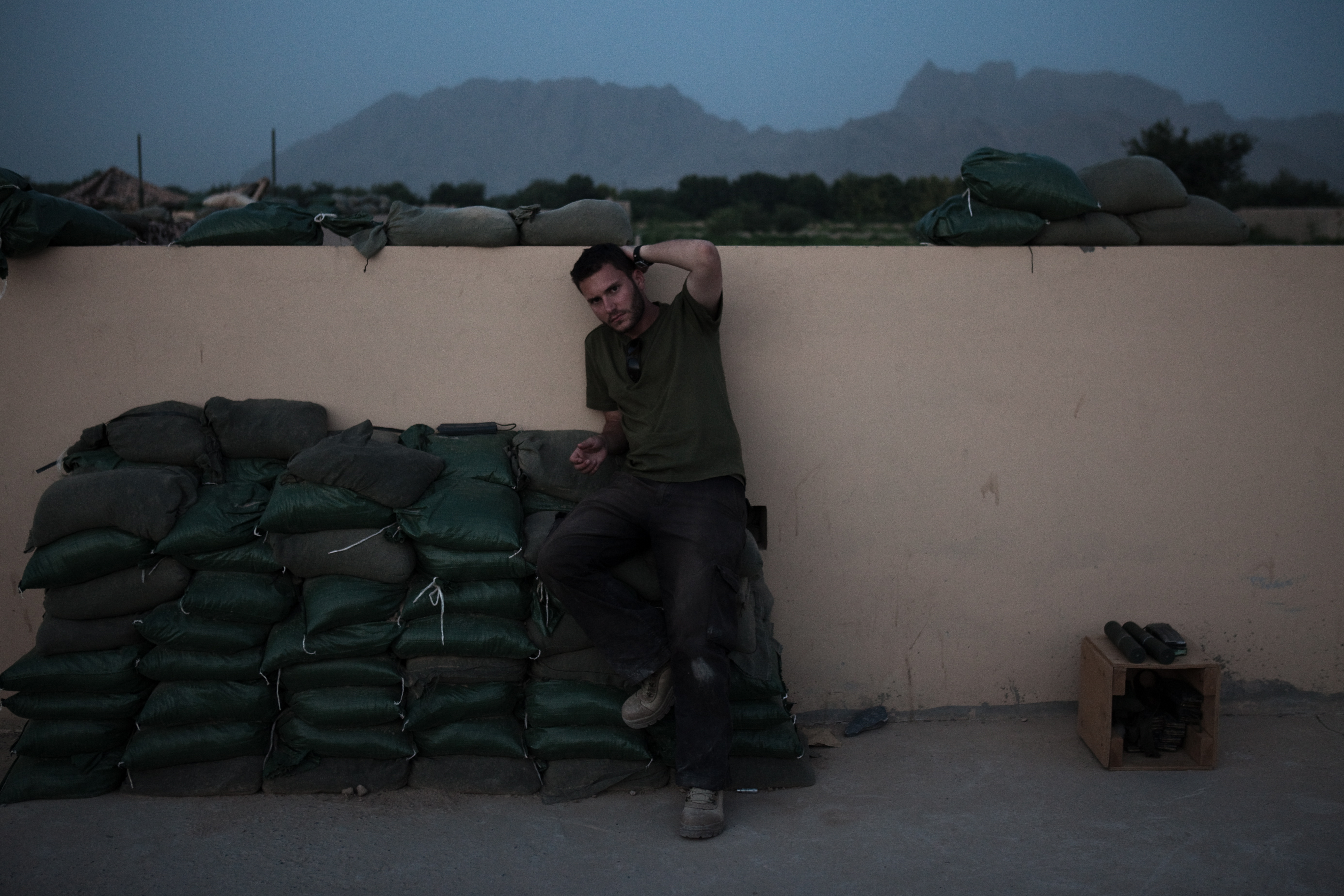
At COP Fitzpatrick (Lucian Read)
The high-velocity snap of a bullet passing the lanky sentry from South Carolina was the first sign combat outpost Fitzpatrick was under attack.
Men scrambled for weapons and flak jackets, running up the stairs to the roof of the pink cinder block building that had once been a police station. “Go, go, go!” went the yell to civilians caught in the open. Already soldiers were scanning the lush green foliage for movement. Then snap, snap, snap – more bullets passing by, and the platoon’s first sergeant, Samuel Frantz, was calling for “203s on that tree line over there.” Read the rest of this entry »
Outrage at appointment of chairman stops jirga
Posted: June 3, 2010 Filed under: Afghanistan | Tags: Abdul Rasul Sayyaf, Afghanistan, Kabul, Mir Ahmad Joyenda, peace jirga, Rabbani Leave a commentIt was billed as the national conference that brought together the country’s senior figures in a concerted push for peace. It was never going to be that easy.
When Burhanuddin Rabbani, the former president, was appointed chairman of the peace jirga yesterday, it sparked outrage among the 1,600 delegates and led to an hour-long halt to proceedings. The plan had been to elect a chairman. But shortage of time meant that organisers appointed him to the post.
It was not just that Mr Rabbani is so closely linked with some of the most notorious warlords in the country that he has been referred to as their “godfather”. Read the rest of this entry »
Insurgents in Kandahar’s undergrowth drag Nato forces into ‘green hell’
Posted: May 31, 2010 Filed under: Afghanistan | Tags: 4th Infantry Division, IED, Kandahar, Maj-Gen Nick Carter, Moshtarak, NATO, Pashmul, Surge, Taliban, Zhari Leave a commentSpring brings renewed risk from IEDs, and political solutions seem a long way off. Julius Cavendish reports from Pashmul
Under a baby-blue sky Sgt Michael Ingram was bleeding his life into the Afghan dirt. Explosives hidden in a mud house had taken off both his legs, and as the call went out for a medic, it took a moment to realise that the medic was also hurt, along with a third US soldier who had taken shrapnel in his shoulder.
One of the most popular men in Charlie Company, First Battalion, 12th Infantry Regiment, 4th Infantry Division, Sgt Ingram died from massive blood loss. “There is no way to comprehend an IED (improvised explosive device) until you see someone hit one,” Lt Mark Morrison, a platoon leader in the same company, said later. “Then everything changes.”
In the half-deserted village of Pashmul – as much a front line as any in southern Afghanistan’s indefinite war of ambush and IED – Taliban fighters are stepping up the fight. With fighters arriving from Helmand and Pakistan, and budding vegetation providing ample cover, the Taliban are using bolder tactics in an attempt to suck foreign forces into a battle of attrition. “The Taliban want to pull us into the grape fields,” Charlie Company’s commander, Capt Duke Reim, said. “Slowly take a company from 130 [men] and bring it down to 115. That’s what they’re looking to do, because the more we focus here on the grape fields the less we focus on Kandahar [City],” – which, with its hundreds of thousands of inhabitants, is the prize in Nato’s population-centric campaign. Read the rest of this entry »
 julius cavendish