What the headlines tell us
Posted: July 10, 2011 Filed under: Afghanistan Leave a commentThere’s an ironic juxtaposition of AFP headlines this morning. First up is:
US-Afghanistan-unrest-Petraeus (10 Jul, 6:26 — 7)
Taliban summer attacks down on last year: Petraeus ATTENTION – ADDS Panetta visit KABUL, July 10, 2011 (AFP) – Insurgent attacks against foreign and Afghan forces in Afghanistan are down this summer, defying projections by intelligence analysts, General David Petraeus said. The top commander in Afghanistan said attacks were down by “a few percent” for May and June, the beginning of the traditional annual fighting season, although he said the number of homemade bomb explosions had risen.
That’s immediately followed by:
Afghanistan-unrest-kidnap (10 Jul, 6:43 — 5)
Seven deminers beheaded in Afghanistan HERAT, Afghanistan, July 10, 2011 (AFP) – Seven of 28 deminers kidnapped in the western Afghan province of Farah last week were beheaded by their abductors and their bodies recovered Sunday by police and tribal elders, police said. The mine clearing workers had been snatched on Wednesday in a district that is the focus of the Taliban insurgency in the province, but no one had claimed responsibility for the kidnapping.
Julius Cavendish: It may not be safe yet, but progress was made thanks to aggressive US tactics
Posted: June 24, 2011 Filed under: Afghanistan | Tags: Afghanistan, First Battalion Fifth Marines, Helmand, NATO, Sangin, transition Leave a commentView from Sangin: A tentative peace accord struck at the start of the year is holding, at least to the extent that it still exists
Seven months ago 500lb bombs were tearing into Taliban positions outside Sangin district centre in Helmand province as the US Marines here launched an aggressive and costly campaign against Taliban insurgents. What was already Afghanistan’s bloodiest district for foreign troops quickly became more so.
The infusion of troops, including US Marines, was part of President Obama’s surge and despite widespread suspicion of Nato’s spin, it genuinely seems that their arrival had an impact, especially in Helmand and neighbouring Kandahar – although neither province is yet safe, nor going to be in the immediate future. The Taliban matched Obama’s surge with their own escalation, knowing full well that tactical defeats matter little, provided they can simply hang-on under the drawdown.
But the gun battles and roadside blasts that once took place in Sangin’s heart have migrated to its fringes – and it’s hard to see that as anything but a vindication of the Marines’ aggressive tactics. Yesterday there was barely a single explosion within earshot of the Marines’ main base. Read the rest of this entry »
The financial scandal that broke Afghanistan’s Kabul Bank
Posted: June 17, 2011 Filed under: Afghanistan | Tags: IMF, Kabul Bank, Karzai Leave a commentThere’s an excellent piece in The Guardian by Jon Boone about the Kabul bank saga that’s a good read for many reasons, not least this description of “the man accused of rivalling only the Taliban in terms of the damage he has done to Afghanistan”:
Khalilullah Ferozi, supposedly under house arrest, settles into a seat and orders a shisha and several plates of rice and kebab. On his wrist sits a diamond-studded watch. As he talks, getting animated, a steady spray of half-masticated kebab flies across the table.
“Bin Laden’s code name was ‘Binoculars’…” – a Taliban judge in his own words
Posted: June 14, 2011 Filed under: Afghanistan | Tags: bin Laden, Taliban Leave a commentHere’s a partial transcript of an interview with a Taliban judge conducted just after Osama bin Laden was killed. His nom de guerre is Khanjari, and he operates in Pana in Giro district in Ghazni province.
We sleep in the mountains at night, in the hills, in caves, and by day we’re moving from village to village. It’s a hard life. In our own country. Sometimes when we go home there are choppers in the sky. Sometimes we stay an hour and go. Sometimes we stay a night or two nights or three… high-ranking Talibs are lucky to see their families once every three months. We have comrades who haven’t seen their families for years because too many villagers know them, know who they are, know what their motorbike looks like. They can be easily identified and detected. So that’s why they stay away. I’ve seen my mother twice since last autumn. She came to my uncle’s house, which is as far from here to Maidan Shah, and I have a secret cellphone number, which she has. If I have network coverage she’ll call me and I’ll answer and we’ll meet. When I first joined the Taliban I was able to live with her and my father but now she knows that if go back home, I couldn’t live there, even if I surrendered, abandoned the war and my job. Each time we meet she cries. Sometimes she says forget about leaving your job. She knows even if I give up I can’t live there anymore. Read the rest of this entry »
The siege of Parun and the mystery of the Du Ab airstrikes
Posted: June 12, 2011 Filed under: Afghanistan | Tags: civilian casualties, Nuristan Leave a commentMiles Amoore has lots of fresh detail on the Taliban’s takeover of Nuristan in the Sunday Times, including the siege of the provincial capital, Parun:
So far a militia led by a former Taliban commander and backed by Afghan police has held the Taliban at bay outside the city. But the blockade has brought the city to its knees, sources say.
Nato denies Parun is under siege but acknowledges that “insurgent activity on the roads … up to Parun has restricted civilian and Afghan police movement”.
Amoore also provides the only account to appear in the mainstream media of the NATO airstrikes that took place in Du Ab (or Doab or Do Ab, you choose) on May 25:
When the planes screeched over Doab, the only police commander who had refused to surrender, Commander Said Rasoul, was having lunch with his men next to a field of wheat. The Taliban, who had entered the main town that morning, had been taunting Rasoul over his radio, his cousin Qari Daoud said. Read the rest of this entry »
The Wedding Day Massacre: An Ominous Afghan Tragedy
Posted: June 10, 2011 Filed under: Afghanistan | Tags: Dur Baba, Gul Agha Sherzai, Lashkar-e-Islam, Nangarhar Leave a commentApart from the tragic loss of the groom and many of his relatives, the attack by Pakistani militants indicates a once-stable province is now back in play
It was past midnight when the insurgents crossed into Afghanistan’s Dur Baba district on the border with Pakistan and began their descent. In the valley below, relatives of the district governor, Hamisha Gul, a tall, handsome man in his late 40s, had gathered at his compound to celebrate the impending marriage of his cousin Nawshir. The wedding would take place the next day and the plans were festive. Men would dance the traditional Pashtun attan to the beating of the tabla and the plucking of the rabab. At Gul’s pre-wedding party, dozens of men were taking advantage of the seasonal warmth to sleep out under the trees. That’s when the masked gunmen opened fire.
In total the Taliban-linked militants killed nine, all men, including Nawshir and his father Rozi Khan. Five more were wounded, and the attackers torched a nearby house and car for good measure, as well as briefly abducting one of the guests. Thursday saw villagers bury the man whose wedding they had come to celebrate. Hundreds gathered to pay their respects before shouldering the litters on which the bodies lay, draped in white shrouds, carrying them to fresh graves. Read the rest of this entry »
First, Take Nuristan: The Taliban’s New Afghan Plan
Posted: June 1, 2011 Filed under: Afghanistan | Tags: al-Qaeda, Lashkar-e-Taiba, Nuristan, Taliban Leave a commentHistorically, Nuristan province has been key to power in Afghanistan, and the militants and their non-Afghan allies are slowly taking control there
Every morning at 8, Maulawi Zahir heads into Waygal district center, a remote mountain village of stone houses stacked almost vertically up granite slopes. As the undeniable man in charge of the Afghan village, the Taliban leader is there to hear and settle disputes. But despite his group’s ascendancy, he struggles to burnish his credentials among his constituents, even in an area where loathing for NATO and the Afghan government runs deep. “People aren’t happy, but they pretend to be,” says one local trader. “They dislike the Taliban as much as they dislike government.”
Zahir’s attempt at daily dispute resolution is important in one respect: for the first time in almost a decade the Taliban are administering an Afghan district unmolested. In fact, Waygal has been almost completely abandoned by NATO for the past three years. For the insurgents — and their non-Afghan militant allies from Pakistan and Arabic-speaking countries — it is the most visible step in a longer term strategy to turn Nuristan, itself virtually given up by the alliance since 2009, into a militant hub and a staging post for attacks on strategic targets, including the capital, Kabul. Read the rest of this entry »
Why the Taliban Won’t Miss bin Laden
Posted: May 11, 2011 Filed under: Afghanistan | Tags: bin Laden, Taliban Leave a commentThe goals of Afghanistan’s insurgency are national, and even many Taliban leaders resented al-Qaeda’s presence on their turf
As the sun rose, the men from the raiding party chanted verses from the Koran, spread their checkered scarves on the dirt and prayed for Osama bin Laden’s swift passage to paradise. It was a ritual they’d performed a hundred times for their fallen comrades. But there were no outbursts of grief or pledges of vengeance. Bin Laden had been a good Muslim, said the small, wiry Taliban judge leading the ritual. Bin Laden had surrendered a life of luxury for one of hardship, and his “death on the battlefield” was befitting. Beyond that, as far as the Taliban are concerned, “his death had no impact,” said the judge, who goes by the nom de guerre Khanjari (and whose identity was confirmed by a member of Afghanistan’s security service).
“Every member of my group is as brave as Osama,” Khanjari continued. “The only difference is he had more money … My friends mean more to me than him. Any one of us would take a bullet for each other.” For the Taliban, bin Laden’s death has been far less important than some in the West may have hoped. Read the rest of this entry »
Afghanistan’s archaeological treasures face a new threat
Posted: April 15, 2011 Filed under: Afghanistan | Tags: archaeology, Mes Aynak Leave a comment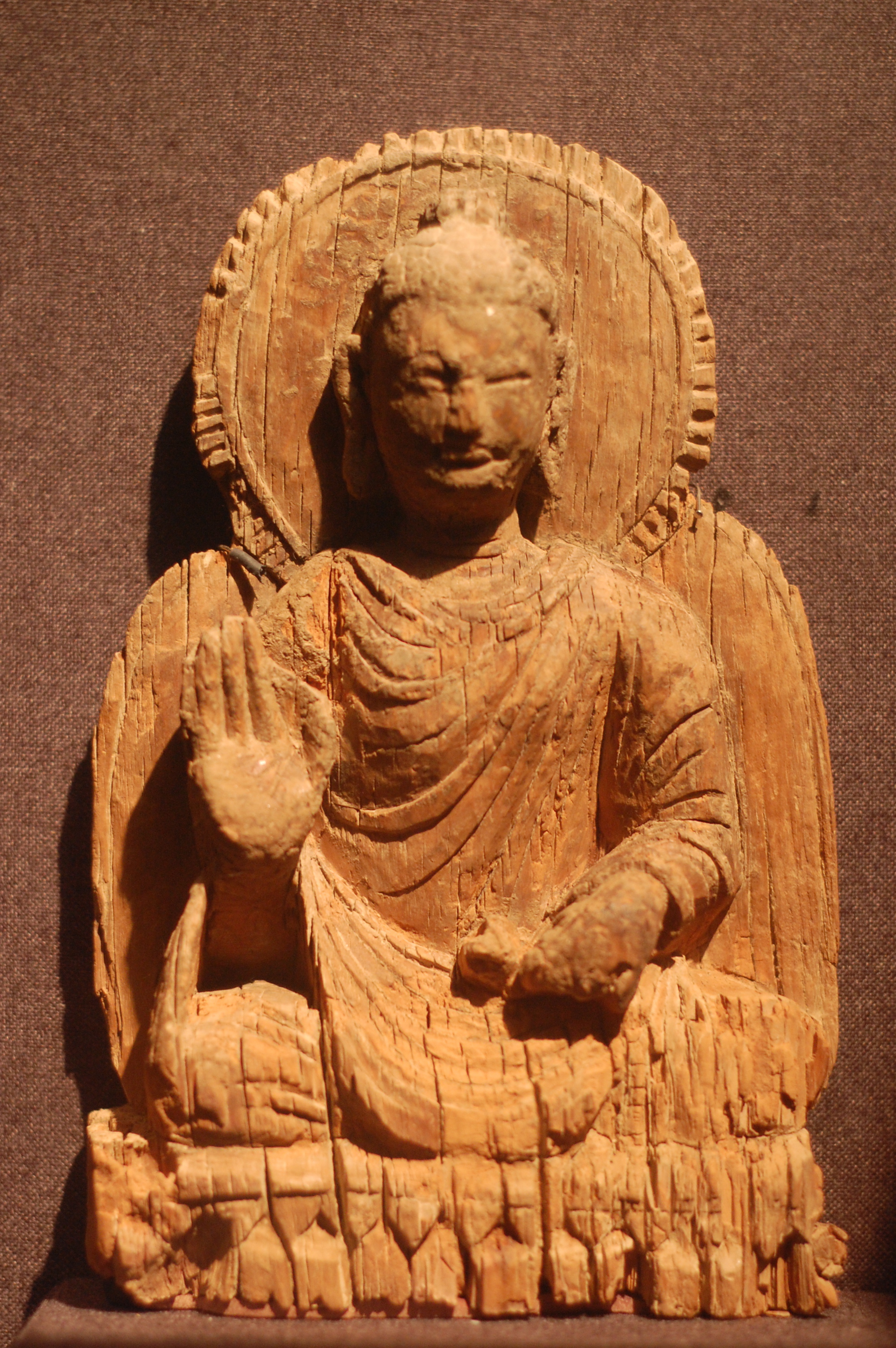
Wooden Buddha from Mes Aynak
Few thought they would do it until they did, firing fusillade after fusillade into two giant statues of the Buddha that had weathered 1,500 turbulent years of conquest and chaos, but could not withstand the Taliban’s tanks. As shells and anti-aircraft rounds thudded into the sandstone giants, Afghans who eked out their lives in the shadow of the statues were aghast.
In the homesteads and caves dotting the Bamian valley floor, “everyone was talking about it,” recalls Mohammad Nazuk Mir Chakaree, now a 20-year-old graduate, from Bamian. “They were saying the Buddhas had done nothing wrong, they weren’t alive, they weren’t a disadvantage to the Taliban – so why were they destroyed?” Read the rest of this entry »
Nato urged to investigate Afghan ‘war criminal’ employed by US
Posted: March 23, 2011 Filed under: Afghanistan | Tags: ASG, Azizullah, civilian casualties, human rights, Special Forces, war crimes Leave a commentThe head of Afghanistan’s Independent Human Rights Commission has urged Hamid Karzai’s government and Nato to investigate allegations, first reported in The Independent, that an Afghan strongman employed by United States Army Special Forces embarked on a spate of war crimes, including rape, the summary execution of children, and torture. “We call on Special Forces – indeed, any forces – and the Afghan government to conduct an investigation of these allegations and find out if [the allegations are] correct or not,” said Nader Nadery, who heads the Human Rights Commission.
He said the commission would make its own efforts to verify the claims against Commander Azizullah, the leader of a US-sponsored militia in the south-eastern Paktika province, but that “it is a core responsibility of the government of Afghanistan to launch an investigation… this is the only way to build confidence in [the country’s security] forces”. Read the rest of this entry »
 julius cavendish